You're standing in a story you didn't write. The systems won't rewrite themselves. But the people inside them can.
How to build purpose despite "broken" systems

Clara Mattei makes the case that systems were designed this way, structured to protect capital and hierarchy, working exactly as intended. Gary Stevenson urges us to explain the problems clearly enough that people demand change.
Both confirm what I see in every room I walk into: the systems won't rewrite themselves. But the people standing inside them can.
That's Story Leadership.
Storytelling ≠ Story Leadership
The story you have been telling yourself is in your control (storytelling). The story you are standing in is the one out of your control. Like an invisible current, it shapes what feels possible before you've even started. To move you need to surface it. Story Leadership is about perceiving the story you are part of and working with it, rather than against it.

Story Leadership, by Serena Hatfield
I have seen many strategies fail not because they were wrong, but because the story underneath them was never addressed.
Over ten years of experience working inside organisations, building an independent publishing house, co-founding a print magazine that wasn't supposed to survive, and spending over three years in management consulting has given me a great deal of insight into the way in which stories influence leadership.
Hatfield's own Story Leadership examples

2015 • Print was dead. Everyone knew it.
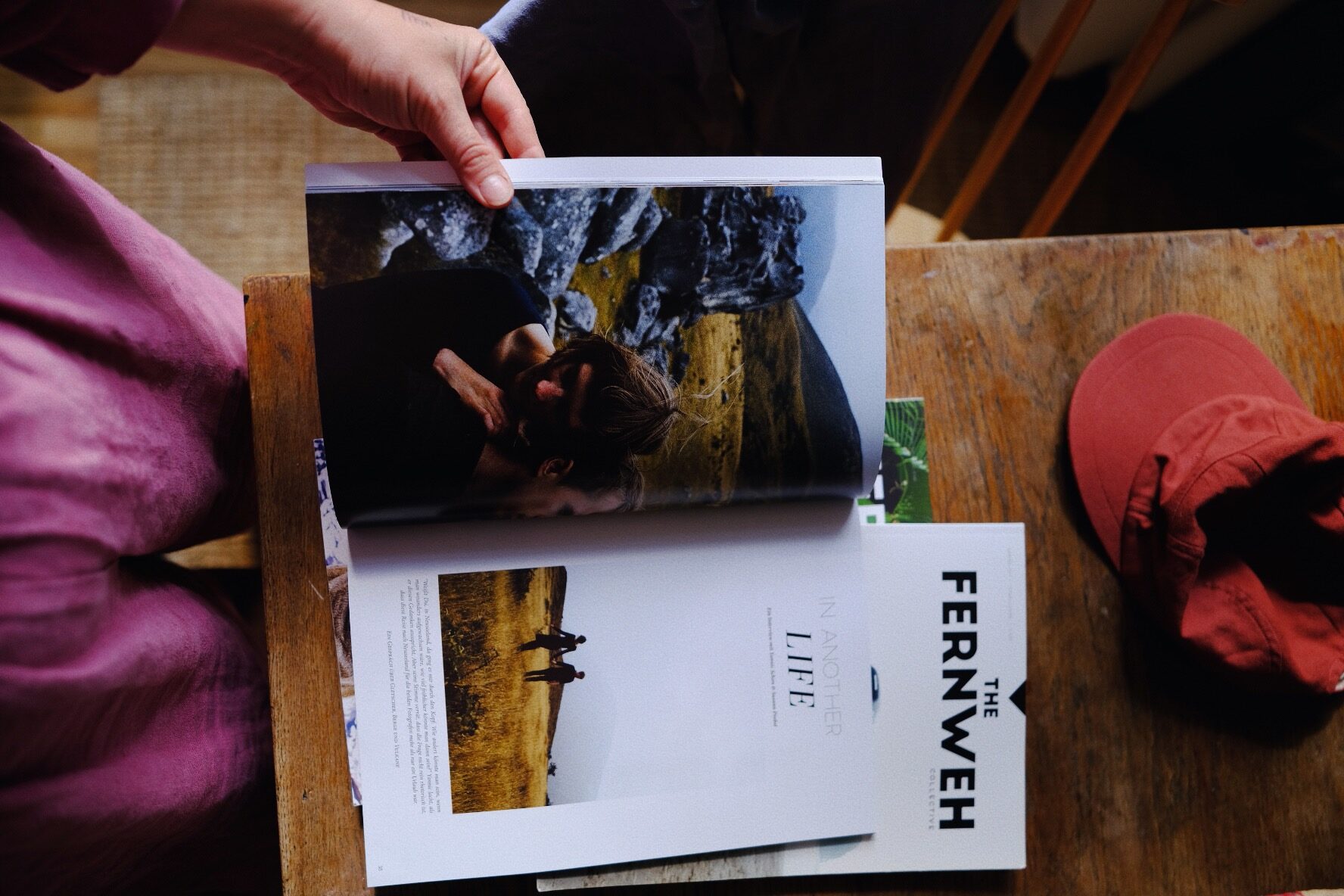
I co-founded a travel magazine anyway, because the story was never about print. It was about what happens to storytelling when everything gets optimised for clicks. The Fernweh Collective: 10,000+ copies sold, no advertising by design, readers turned into writers. Press: ZEIT Online, ntv, Süddeutsche Zeitung, ARD, WDR, GEO, stern.

2017 • Self-publishing wasn't real publishing. Everyone knew it.
I co-founded a publishing house anyway. Twelve books out, two republished by a bigger house. Gretas Freunde Verlag proved we could publish faster, reach our readers more directly, and choose our own positioning. That's how the first children's book on Covid came out eight weeks into the pandemic. It sold out instantly. Press: Spiegel Online, rbb, Tagesspiegel, Süddeutsche Zeitung Magazin, Brigitte.

2026 • Hope is naiv. Everyone knows that.
We've been using hope wrong. Greeting-card style, when it's actually a structural force. 89% of us want meaningful change; most believe we're alone in wanting it. I built the Radical Hope Club from zero: a school for adults done giving up. A free newsletter at an 80% open rate (industry average is 20–30%), a €1/month membership, research published in the open. Come with.
Most leaders can see what needs to change. Few can lead toward it. The difference is almost always narrative.
The Story Leadership Method
The Studio is the work. The Club is the proof.
© Studio Hatfield 2026, Legal / Privacy